Thursday, February 23, 2012

Make your Best Memories Work For You

Reinforcing good memories is critical way to strengthen personal power, stay positive, and enjoy life more. In fact, neuroscience researchers have identified that certain proteins are used to reinforce the areas where memories are stored in the brain. These proteins are triggered by the brain every time we recall that memory.

A new drug call PKMZeta can actually inhibit these protein, and the effect is that when people remember an event, the emotional content of the memory is not recreated.  If the memory was traumatic, the trauma can decrease. This drug has enormous implications on the treatment of serious trauma, whether from sex abuse, PSTD from active military service,  or accident trauma.


But what about the other side of the memory equation that of positive, self reinforcing memories? If we want to strengthen our confidence and personal power, we need to remember positive situations. By reinforcing positive memories, the protein that helps memories to form, will strengthen the emotional component of that memory even more with each repetition. This gives us added confidence, and personal power.


Neuroscience research confirms that memories degrade over time.
 If we don't remember the positive events in our lives, they recede from us.

If you had a successful time in your life, and then went through a tough economic recession for instance (sound familiar?), the more recent, painful memories of financial uncertainty or losing your job may even crowd out the positive memories that you may have unconsciously, but wisely reinforced. You could find yourself wondering why you feel so much less powerful than earlier in your life.

Memories degrade over time. If we don't remember the positive events in our lives, they recede from us. If you don't want that to happen, we need to deliberately spend mindful time remembering the positive. Don't leave this to chance...be deliberate.

Here is simple but very powerful process to reinforce positive memories in your life. You may be surprised at how great this exercise makes you feel!
  1. Make a list of the top ten achievements of your life.
  2. Find a quiet space where you can be undisturbed for at least 10 minutes. 
  3. For each memory on your list, spend at least one minute, remember that event in as much positive detail as possible. 
  4. As the brain stores different aspects of memory in different parts of the brain, try and remember color, sound, smell, feeling, connectedness with others, and location.
  5. If you find yourself focusing on a negative aspect of that achievement, just gently refocus on the positive.
  6. Write in your journal, diary or blog about the experience and any insights
  7. Try and repeat the exercise every day for at least a week. Over this time, look for ways this exercise allows you to see your own skills and competence more positively, or you present yourself more positively to others.
Image: The Times of India

Wednesday, January 25, 2012

Is this the Perfect Meditation Soundtrack?

What meditation technique should I learn?


Meditation is a mental technique, that most people in a busy western mindset have trouble grasping without training. So find a meditation teacher and learn a technique.

At first, don't worry what technique you learn there are countless that will do. 
The point is that you start exploring your mind in a way is not yet known.

 Each meditation technique has a different impacts on your brain function. Some will energize, some will relax, some will trigger emotions you would rather die before feeling. And maybe, one day you will find the meditation technique that leads you to enlightenment.

If you like, you can start right here with the NeuroFinity meditation

Sunday, December 18, 2011

Awareness that Has No Beginning and No End

In meditation, you connect with an awareness 
that has no beginning and no end, 
that is not rooted in time or place.
 Is it possible that your experiences are the 
same experience of the ancient yogis?


Thursday, December 1, 2011

How deep are your memories?


Memory is one of the most powerful ways to enhance your meditation practice, and the power of your mind.  I'm not talking about memorizing facts, that is one type of memory, but it activates different area of the brain.

I'm going to introduce you to a ten minute memory exercise that increases your skill at deliberately navigating through deep memories.


What are Deep Memories?

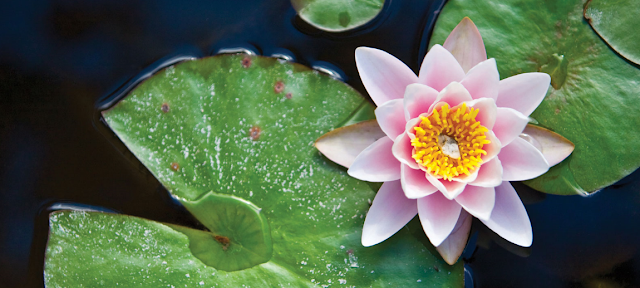
Deep memories are memories that lie below the surface of what you normally remember about an event, an emotion, a person. For instance, if you sit quietly and think about where you lived when you were five years old, you will probably immediately or with relatively little effort, be able to remember maybe the name of the street, or your childhood friends name, or your pets name at that time.   A deep memory in contrast is a something that you would normally never occur to you to put your attention on - like the sound of the train that ran behind your house, or exactly what you felt when you were bullied at school, or the color of a model train you had as that five year old.  A deep memory can be an emotion, a color, a sound, an image - any sensory input whatever. It might be the single water lily on a quiet pond your found by accident wandering in a foreign city, the sound of laughter across the room at a party you once threw. But it is always that something that is below the normal 'surface' of remembering. It may have no importance, or you might find that is has some meaning that you never would have thought about.

Deep Memories are so valuable to us because they are just not available to us unless we make a specific effort to use your consciousness, the skill at navigating your own mind. But the fact that they are there makes us aware how rich our own mind is, and how so many things that might be important are normally forgotten in our normal daily lives.

Make sure you understand deliberate navigation of deep memories is very different from daydreaming. Daydreaming is what you do sitting beside the pool in the summertime, half asleep from drinking that mid-afternoon cocktail.  Navigating deep memories is a consciousness skill, something that improves greatly when we practice, even for a short period.

Ask around and you will find that navigating deep memories is something that very few people have even taken any time to ever do, even though it takes very little skill and very little time.

Want to feel revived, connected with your past, 
grateful for your life in 10 minutes or less? 
Then the Deep Memory Exercise might be for you.

Just follow these steps the next time you sit down to do your meditation practice:

1. Close your eyes and pick a time in your life when you felt happy. It doesn't really matter how long ago it is, the key thing is that is when were were happy. Don't pick a negative memory unless you have the confidence to work through negative emotional states that may get triggered.


2. Gently direct your attention to the most obvious aspects of that memory - whether it is about an emotion, a place, a person, an idea. Do this for about a minute or so.


3. Now, go deeper. Gently direct your attention to aspects of that memory in turn, for instance the color of the leaves, the sound of a car door slamming, what your friends talked about, how you felt about what was going on. If you attention wanders, bring it back to that memory and look for something else. Seek to go deeper into one memory or area of memories. This is not free associating from one topic to another, it is going deeper into one topic.


4. The key is relaxed effort. This is not a difficult, goal orientated exercise, its a training in deliberate attention management. If you are straining, back off and be easier on yourself.


5. Once you are comfortable with the concept of going deeper, stay within the general area, but slowly allow your attention to naturally explore, using your curiosity as a guide. For example, if you picked a particular time in your life remember other things that were happening at that time, and go deeper into each of those things in turn. Or if you picked a person, remember all the things you ever did with that person, and go deeper into each one. If it was an activity, remember other times or places you did that same activity, and go deeper into each of those places.


6. Continue this process until you come across something that you really haven't remembered for some time, and that would never have occurred to you to place your attention on if you had not done this exercise.


7. Continue the memory exercise for at least 10 minutes.